 EN ▾
What dysgraphia is
Dysgraphia belongs to the specific learning difficulties (SpLD), together with dyslexia and dyscalculia. It affects children of normal intelligence – children who understand the material well but stumble over one particular skill.
With dysgraphia, that skill is the mechanics of writing: the shape, size and spacing of letters and digits, staying on the line and writing speed. It is not a lack of knowledge or effort. The International Dyslexia Association describes dysgraphia as not primarily a motor problem: the difficulty lies in remembering the shapes of letters and digits and planning the finger movements needed to write them. When the difficulty is mainly about movement and coordination, specialists may use a different name, developmental coordination disorder (DCD). Experts do not fully agree where one ends and the other begins, so you may see both terms. Dysgraphia often persists with age, but support can make writing more legible, faster and less tiring.
Important: dysgraphia has nothing to do with intelligence. A child with dysgraphia can be the best reasoner in the class and still hand in work nobody can read.
Dysgraphia, spelling difficulties and dyslexia
These difficulties often appear together, but each one is about something different:
Signs to look for
This list is not a test or a diagnosis. A single sign proves nothing – young children's handwriting is still developing. It is worth looking closer when several of these persist despite practice:
Dysgraphia in maths
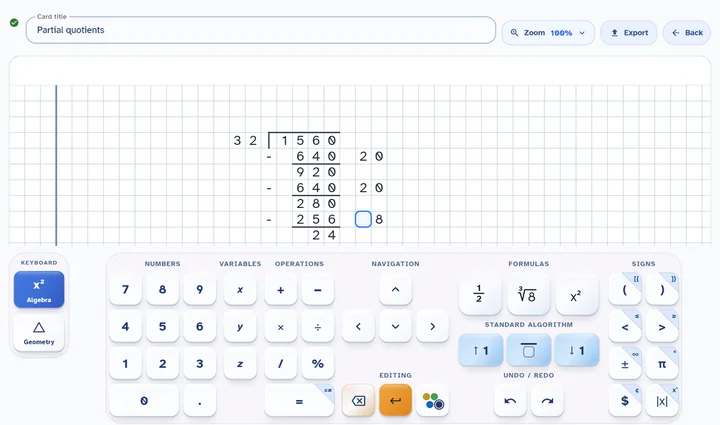
People usually think of dysgraphia in language lessons, but in maths it can cost even more. In maths, the position of a digit carries meaning. A digit shifted one square to the side turns ones into tens, and a decimal point in the wrong place changes the whole answer.
Situations that parents of children with dysgraphia know well:
For practical help with column addition, long multiplication and division, fractions and decimals, see our separate guide: Dysgraphia and maths: how to help with written calculations. →The result hurts: the child understands the method and calculates correctly, yet loses marks for the way it is written. After a few such tests many children start to believe they are "bad at maths", although the problem lies elsewhere.
Getting an assessment
In England, start with your child's class teacher and the school's SENCo (special educational needs co-ordinator). The school can put SEN support in place and may involve an educational psychologist, a specialist teacher or an occupational therapist who looks at fine motor skills. For more complex needs, parents can ask the local authority for an education, health and care (EHC) needs assessment, which can lead to an EHC plan (GOV.UK). A private assessment by an educational psychologist, or a referral through your GP, are other routes. Scotland, Wales and Northern Ireland have their own systems, so ask your school how it works there.
Handwriting develops over the first school years, so specialists often want to see a few years of writing instruction before confirming dysgraphia. That is no reason to wait with support: if difficulties are clear early on, ask for exercises and help straight away.
Adjustments at school and in exams
With a written assessment, SEN support or an EHC plan, the school can change how your child works and is tested. The adjustments concern the form of the work, not lowering what your child is expected to know.
Adjustments that are often recommended for dysgraphia and make sense in maths:
For GCSEs and other exams, schools apply for access arrangements under the rules of the Joint Council for Qualifications (JCQ), for example extra time, a scribe or speech recognition technology. They are based on evidence of need and on the way your child normally works in class. Ask the SENCo about it at least a year before an important exam.
How to help at home
Frequently asked questions
Is dysgraphia the same as dyslexia?
No. Dysgraphia affects how writing looks and how fast it is – letters and digits are illegible or uneven in size. Dyslexia affects reading – slow reading speed, confusing similar letters, difficulty understanding text. The two often occur together but are separate conditions.
Is dysgraphia the same as dyscalculia?
No. Dysgraphia is a difficulty with the physical act of writing – a child knows what they want to write but the hand doesn't keep up, or the writing comes out illegible. Dyscalculia affects understanding numbers and carrying out maths operations, regardless of how a child writes. They are separate specific learning difficulties and may, but don't have to, occur together.
Can a child with dysgraphia get exam access arrangements?
Often, yes. For GCSEs and other exams, schools can apply for access arrangements such as extra time, a scribe or speech recognition technology. They are based on evidence of need and on how the child normally works in class – ask the SENCo about this at least a year before an important exam.
How early can dysgraphia be assessed?
Handwriting develops over the first school years, so specialists often want to see a few years of writing instruction before confirming dysgraphia. That said, this is no reason to wait with support – if difficulties are clear early on, ask the school for exercises and help straight away.
Sources
- Understood.org – Classroom accommodations for dysgraphia
- International Dyslexia Association – Understanding dysgraphia
- Santangelo, Graham, A Comprehensive Meta-Analysis of Handwriting Instruction, 2016
- Hoy, Egan, Feder, A Systematic Review of Interventions to Improve Handwriting, 2011
- GOV.UK – Special educational needs support (England)
- GOV.UK – Extra help: EHC needs assessment and EHC plans (England)
- JCQ – Access arrangements and special consideration
This guide is for information only and does not replace an assessment or advice from a specialist. If you suspect dysgraphia, talk to your child's school or a qualified specialist.